
Seating that starts with the human, not the cushion.
Sliding, leaning, a foot off the support, a pressure injury on the sacrum: every symptom is the body telling us something. We train clinical teams to find the why, and turn it into the right solution.
Technology has moved on. Body shape hasn't.
Wheelchairs, cushions, equipment and medicine have advanced so far, so fast. Yet when we look at the body shape of people who function from a seated position, we are still seeing the same complexity and the same deformity.
In our experience teaching in Ireland, the UK, the US and around the world, the same gap appears everywhere: university education & clinical training programs for health professionals rarely teach postural care from a human first perspective, or across the full 24 hours.
Moving from technology first to human first is a big change in mindset, and it changes everything that follows.
24-hour postural care is not a luxury, and it's about more than comfort. It is as much about length of life as quality of life.
Stop putting a plaster on the problem.
One symptom can have many causes, and each cause needs a different solution. Treat the symptom and it comes back, the equipment gets blamed, and the body gets hurt. Treat the cause, and you get a solution that lasts, for the body and the person.
Pressure injury on the sacrum → add a pressure-relieving cushion. The pelvis is still in a posterior tilt, the sacrum is still the peak pressure area, and the injury returns.
Why the sacrum? Why the posterior tilt? Assess the causes hands-on in supine, then match the solution to the confirmed cause. Better outcomes, equipment that works as intended, bodies that aren't injured.
The wheelchair can't do it all.
The chair is only part of someone's day. Most people who sit for much of the day also spend many hours lying down, and some time standing.
Body shape changes slowly, through gravity acting on positions held for hours at a time. A well-supported seated position protects body shape through the day; a well-supported lying position protects it through the night. In the chair, that's balanced with function. At night, the focus can be fully on body shape.
Night is a precious time and the bedroom is a sanctuary, so supported supine is planned around sleep, comfort and family life. Where it's a goal, supported supine is also where body shape can improve over time, such as chest shape and symmetry in people with scoliosis.
Someone who sleeps curled up in a fetal position, or always on one side, often sits in a matching posture. We can usually predict one from the other. That's why we never look at one without the other.
In Ireland and the UK, physios often assess in lying and OTs in sitting, on separate pathways. The body doesn't work in separate pathways. We call for postural care clinics, not seating clinics, with the whole team working together across the 24 hours.
Clinicians are the experts in the body, and the body can tell us exactly what it needs if we learn to listen
Simple, memorable concepts that clinicians around the world now use every day, built into one clear system from assessment to solution.
The Life Box
The relationship between the ribs and the pelvis. Open and symmetrical, or closed, triangled, twisted? One look tells you where to start.
The Sitting Footprint
Where the body is really loading: seat, feet, back and sides, scored 0 to 3. Gaps and peak pressure tell the story.
Resting length
We assess muscles like the hamstrings where the body actually rests, not how far they can be stretched. Seating has to work at rest, all day.
It all comes back to the pelvis
The pelvis doesn't float in space. It moves through the hips and the lumbosacral junction, so we always check pelvis-up and pelvis-down.
A clear system, from assessment to solution
- 1The callWhat has been reported: sliding, leaning, a foot off the support.
- 2Observe in sittingLife Box, pelvic position, Sitting Footprint.
- 3Consider potential causesPelvis-up and pelvis-down, ruled in or out in supine.
- 4Identify key featuresWhat the seating and supported lying must do.
- 5Close the loopNeeds met across the 24 hours?
Learn online. Practise hands-on. Keep going together.
Built for groups and multidisciplinary teams: OTs, physios and rehabilitation engineers. We come to your service, from HSE teams and CDNTs to NHS trusts, anywhere in Ireland, the UK and Europe, and run hybrid courses in Sligo. Whether you're new to 24-hour postural care or have decades of experience, we meet you where you are and build in layers. One shared language, so OTs and physios can work as one postural care team.
What clinicians say
"It has changed my whole perspective and approach to posture management. It takes the complexity out of it and gives a practical and realistic hands-on way to know exactly what you are doing in the assessments."
"Now all those compensatory movements you see in a child in an inappropriate seating system make sense. It gives me a rationale for each and every solution I put on a wheelchair."
"I will feel more confident as an OT going into hands-on assessment, where I would have previously relied on a senior colleague. Also thinking about the why: what is causing what I am seeing?"
"Seating and posture assessments are new to me, having recently joined a CDNT. I am grateful to get such hands-on experience and the correct terminology and the Life Box to use in my practice."
The assessment forms we teach with
Every form comes as a web form, and most also as a fillable PDF. The web forms fill in summaries as you go and include worked examples, so they're a learning tool as well as a clinical one. Nothing you enter leaves your device.
See the assessment formsMeet the team
Practising clinicians, teaching what we do. We don't just teach assessment; we're still doing it, with service users in their homes and clinics across Ireland and the UK, and on clinic days with the teams we train. Every case and every solution we teach comes from real practice. And we don't sell equipment or talk about specific products, so our training is about the body, not a brand.
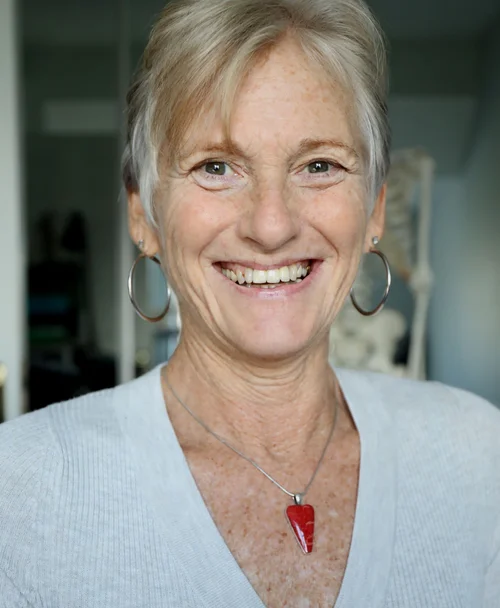
Sharon Sutherland
Specialising in 24-hour postural care since the late '80s, across North America, Latin America, Australia, New Zealand and Europe. Contributing author to Seating and Wheeled Mobility: A Clinical Resource Guide. Creator of the Life Box and the Sitting Footprint.
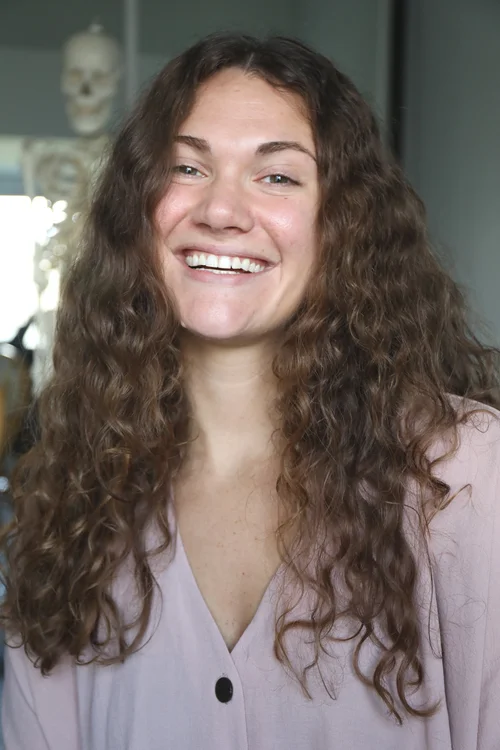
Dr Jenn McKee
Doctor of Physical Therapy (University of Pittsburgh), former faculty at the University of Limerick. Leads all our in-person training, private assessments, annual reviews and custom moulding appointments, and created the Human First Approach.
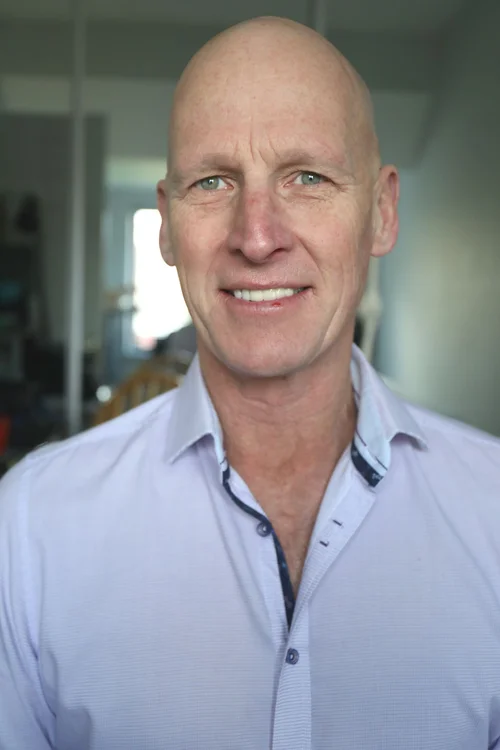
Scott Sutherland
Your first point of contact. Scott looks after bookings, emails, communication and tech support, so courses run smoothly and participants are looked after.
Bring the Human First Approach to your team.
Tell us about your team and caseload, and we'll suggest the right mix of online, hands-on and mentorship.